
Last Updated: November 14, 2026
Quick Summary
The best alternatives to Franklin Sports gloves are built on genuine Cabretta leather palms, reinforced at the base of the palm, and secured with an adjustable wrist strap. Prioritize leather quality and closure over the logo, since a well-fitted mid-range glove beats a loose premium one.
- Cabretta leather palms mold to your grip within a few sessions and hold tack longer than synthetic.
- The base of the palm at the knob is the most common failure point, so look for a reinforced palm.
- Replace gloves when the palm gets slick or the closure no longer locks the glove down.
- Youth players outgrow gloves faster than they wear them out, so prioritize fit and secure closure.
- Air gloves out after every game and rotate two pairs to extend their lifespan.
Table of Contents
- What to Look for in Alternatives to Franklin Sports Gloves
- Best Batting Gloves That Rival Franklin's Lineup
- Youth Batting Gloves: Sizing and Value Alternatives
- Baseball Batting Glove Fit: How to Match Your Hand
- Batting Glove Durability and Grip: What Holds Up
- Where to Find Your Next Glove
- Frequently Asked Questions
What to Look for in Alternatives to Franklin Sports Gloves
Franklin Sports gloves have earned their place in dugouts everywhere, but plenty of ballplayers are hunting for something different. At Ballpark Built, we hear the same question often: what actually matters when you step away from the big-name glove you grew up with? The best alternatives to Franklin Sports gloves come down to four things: leather quality, palm construction, wrist closure, and how the glove fits your hand shape.
Here's the short version. Genuine leather palms generally break in to your grip and hold feel longer than synthetic palms, which tend to stiffen and slick over a season. A reinforced palm adds life in the spot where the knob grinds hardest. And a wrist strap that locks down keeps the glove from twisting mid-swing.
The American Baseball Coaches Association regularly reminds coaches that equipment fit affects swing mechanics, and batting gloves are no exception. A glove that bunches at the palm changes how the bat sits in your hands.
Below, we break down what separates a good alternative from a great one, with guidance by player type, budget, and playing conditions.
| Feature | Why It Matters | What to Look For |
|---|---|---|
| Palm material | Feel and durability | Genuine leather over synthetic |
| Palm reinforcement | Wear at the knob | Added layer at base of palm |
| Wrist closure | Locked-in fit | Adjustable strap, snug cuff |
| Stitching | Longevity | Double-stitched seams |
| Fit | Bat control | Snug, no bunching |
Best Batting Gloves That Rival Franklin's Lineup
"Best alternative" means something different depending on what you disliked about your last pair.
If you want better leather feel: Look for genuine Cabretta leather palms. Our batting gloves are built on Cabretta palms for exactly this reason.
If you want to stand out: Mass-market gloves are made in huge runs, so you see the same colorways in every dugout. Small-batch and limited-edition designs solve that.
If you want a locked-in fit: Check the wrist closure first. A adjustable strap with a snug cuff keeps the glove from twisting mid-swing; a loose or elastic-only cuff lets the glove rotate on the bat.
If you want value for a growing player: Youth players outgrow gloves faster than they wear them out, so prioritize fit and a secure closure over premium leather. See the youth section below for sizing guidance.
A few things to check before you buy any alternative:
- Leather type: Cabretta leather gives a soft, tacky feel out of the box; synthetic blends are cheaper but slicker over time.
- Palm thickness: Thicker palms last longer; thinner palms give more feel.
- Ventilation: Breathable backs help in hot weather and reduce sweat buildup.
- Design: Limited-run colorways let you express your own style.
- Stitching: Double-stitched seams at the palm and thumb survive the pull of a full swing.
The honest trade-off: premium leather and small-batch designs cost more than a basic synthetic glove. If you play a full season and want gear that looks and feels different, that extra spend earns its keep.
Watch out: don't assume a higher price means a better fit. Leather quality and closure matter more than the logo, and a well-fitted mid-range glove beats a loose premium one every time.
Youth Batting Gloves: Sizing and Value Alternatives
Youth players outgrow gloves fast, so value matters as much as feel. The right youth batting gloves fit snug without pinching, leave a little room at the fingertips, and hold up to a full season of practices.
Sizing is where most parents go wrong. A glove that is too loose slides on the bat and kills bat control. Measure your player's hand from the base of the palm to the tip of the middle finger, then check the brand's size chart, since sizing varies between makers.
For a deeper walkthrough on fit and durability, our guide to the best batting gloves for high school players covers how to size, break in, and pick gloves that last.
Value tips for youth alternatives:
- Buy one size up only if your player is mid-growth-spurt.
- Rotate two pairs to extend the life of each.
- Wash by hand and air dry to keep the leather from cracking.
Baseball Batting Glove Fit: How to Match Your Hand
Baseball batting glove fit is simple to describe and easy to get wrong: the glove should feel snug across the palm and knuckles with no fabric bunching when you make a fist. A proper fit keeps the bat locked in your fingers and gives you real bat control.
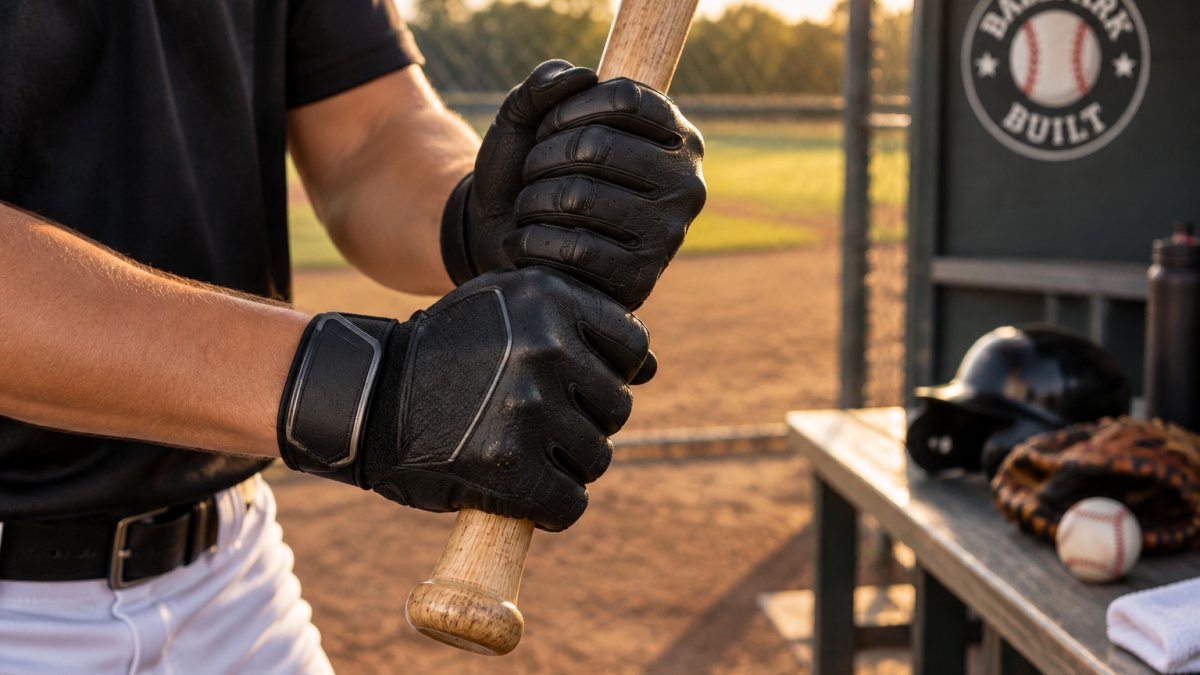
Try this when you try on a pair:
- Slide the glove on and make a fist. The leather should flex, not pull tight across the knuckles.
- Check the fingertips. Extra length past your fingertips means the glove is too big.
- Fasten the wrist strap. Your hand should feel supported, not squeezed.
- Grip a bat. If the glove twists or bunches at the palm, size down or try a different cut.
Hand shape matters too. Wide palms and short fingers may need a different brand than long, narrow hands. If you are switching from another brand, expect a short break-in period while the leather molds to your grip.
Batting Glove Durability and Grip: What Holds Up
Batting glove durability and grip come down to materials, construction, and how hard you use them.
Where gloves fail first. The base of the palm, right where the knob of the bat digs in, is the most common failure point. A reinforced palm, an added layer of leather or synthetic at that spot, is the single best defense.
What extends lifespan.
- Air gloves out after every game instead of leaving them in a bag. Trapped sweat is what cracks leather.
- Rotate two pairs so each dries fully between uses.
- Wash by hand with mild soap and air dry, never machine dry.
- Store flat, not crumpled, so the palm doesn't crease at the knob wear point.
How playing frequency changes replacement timing. A rec player who practices twice a week may get a full season or more from a leather palm. A travel or high school player hitting most days will typically wear through a palm faster, especially without a reinforced knob area.
Grip and feel. Leather palms hold their tack longer than synthetic, and a thinner palm gives more feel while a thicker one lasts longer, that trade-off is real and worth choosing deliberately. Breathable backs and moisture-wicking materials help in hot weather, when sweat breaks down leather faster.
For a comfort-focused comparison, our roundup of the best batting gloves for comfort breaks down which materials feel best over a long game.
Watch out: stretching a too-tight glove with heat or water can shrink the leather unevenly and ruin the fit for good, size correctly instead of trying to force a break-in.
Where to Find Your Next Glove
Ready to move on from your old standby? The best place to start is a shop that lets you compare leather, fit, and design in one place.
Our fielding gloves are made from premium full-grain kip leather with a game-ready pocket, so you can gear up for the field as well as the plate. If you are buying for a whole squad, we offer team pricing on orders of 12 units or more. Reach out through our contact page with your team name, quantity, and the products you want, and we will help you sort the order.
The right alternative is the one that fits your hand, matches how you play, and holds up through the season. Try a pair, break it in, and let the leather tell you the rest.
Finding a glove that fits your hand and your game takes a little homework, but it pays off every at-bat. Ballpark Built builds limited-run batting and fielding gloves in small batches, with genuine leather palms, bold designs, and game-ready construction, plus team pricing for orders of 12 or more. Get started with Ballpark Built and gear up in gloves that perform when it matters and look different doing it.
Frequently Asked Questions
Are Rawlings or Franklin gloves better?
Both brands make quality gloves, but the better choice depends on your priorities. When comparing alternatives to Franklin Sports gloves, focus on fit, leather quality, and how the glove feels during your swing. Try on multiple pairs and choose the one that matches your hand shape and playing style rather than brand loyalty alone.
What are good alternatives to Franklin CFX Pro batting gloves?
Players looking beyond the CFX Pro often explore other brands that offer similar synthetic or leather palms with different closure systems. Look for gloves with reinforced palms, breathable backs, and a snug wrist closure. Ballpark Built's limited-run batting gloves are a strong option if you want unique designs and game-ready quality without a big-brand markup. Compare fit and grip before committing.
Which batting gloves are best for youth players?
Youth batting gloves should prioritize fit and comfort over premium materials. Look for youth-specific sizing, a secure wrist strap, and breathable fabric to handle sweat. Durability matters because young players often wear gloves through practices and games. Avoid adult gloves that are too loose, as they reduce bat control.
How should baseball batting gloves fit?
A proper baseball batting glove fit means the glove is snug but not restrictive. Your fingers should reach the end of the glove without excess material, and the wrist strap should close securely without pinching. There should be no bunching in the palm, which can affect grip. Try gloves on with a bat in hand to check flexibility. If you are between sizes, size up for youth players or size down for adults who prefer a tight feel.
