
Last Updated: November 19, 2026
Quick Summary
Batting gloves with wrist support are worth it for hitters who want a more secure, locked-in feel through the swing, especially on check swings and mishits. They are a stability feature, not a cure, so they won't fix or prevent a wrist injury.
- Long cuffs add stability but can limit the wrist flick that adds bat speed.
- Test a long cuff with five dry swings and five check swings before committing.
- A batting glove adds stability but will not diagnose an injury or replace medical support.
- A wrist brace is a medical device built to limit motion and protect an injured joint.
- Power hitters who rely on wrist flick often prefer a shorter cuff.
Table of Contents
- What Wrist Support in a Batting Glove Actually Does
- Long Cuff vs Short Cuff Batting Gloves: The Real Trade-Off
- Full Wrap Batting Gloves and the Locked-In Feel
- How Batting Gloves Should Fit Around the Wrist and Hand
- Batting Glove Wrist Support vs Wrist Brace: Know the Difference
- Choosing Your Next Pair of Batting Gloves
- Frequently Asked Questions
What Wrist Support in a Batting Glove Actually Does
Are batting gloves with wrist support worth it? For some hitters, yes. For others, no. The answer depends on what you expect the glove to do. At Ballpark Built, we build gloves for players who want a locked-in feel at the plate.
Here's the honest version: wrist support in a batting glove is a stability feature, not a cure. It tightens the connection between your hand and your swing. It does not fix an injury, and it does not replace medical care. A glove with a wrist strap can give you a more secure feel through the swing. What it cannot do is diagnose pain or stabilize a damaged joint.
That distinction matters before you spend a dime. Below, we break down cuff styles, fit, and when wrist support helps, so you can decide with clear eyes.
Long Cuff vs Short Cuff Batting Gloves: The Real Trade-Off
Long cuff versus short cuff comes down to one trade: stability against freedom. A long cuff, sometimes called an extended cuff, wraps further up the wrist and often includes a wrist strap. A short cuff stops at the base of the hand and leaves the wrist open. Neither is "better", they solve different problems for different hitters.
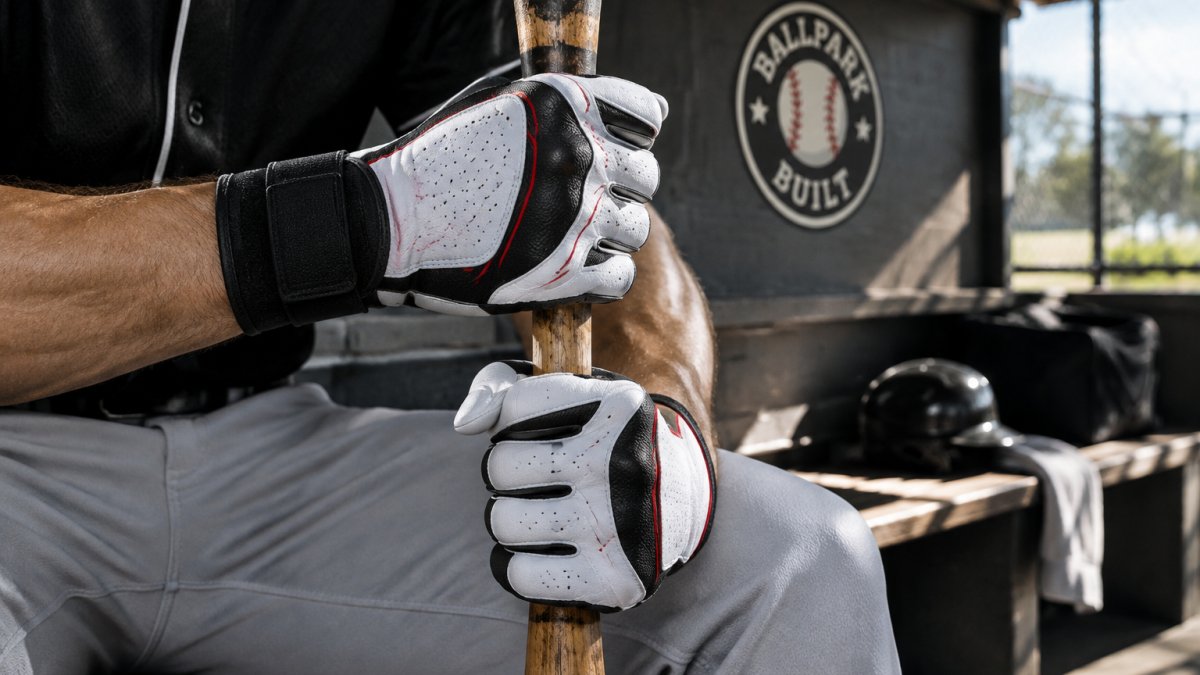
To compare them fairly, judge both styles on the same four criteria instead of going by feel alone:
- Comfort: Does the cuff sit flat against the wrist without bunching under the strap? A long cuff that wrinkles at the hinge point will bother you by the third inning.
- Mobility: Can you roll your wrist through a full swing and a check swing without the cuff pulling? Short cuffs usually win here, but a well-fitted long cuff can come close.
- Grip security: Does the glove stay locked to your hand when you choke up or adjust your grip mid-at-bat? Long cuffs and full wraps tend to hold more securely.
What you gain with a long cuff:
- A more secure fit through the swing
- Extra wrist support on check swings and mishits
- A taped-wrist feel some hitters love
What you give up:
- Range of motion. Long-cuff gloves can feel constricting, and some hitters say the cuff limits wrist mobility and the wrist flick that adds bat speed.
- A lighter, freer feel. Short cuffs let the wrist move naturally.
A quick way to test a long cuff before you commit: put the glove on, grip a bat, and take five dry swings. Then take five check swings where you stop the bat mid-flight. If the cuff digs into the top of your wrist or you feel pressure on the back of your hand, that glove is fighting your swing. Watch out: a cuff that feels fine standing still can bind the moment you rotate, so always test it in motion.
If you're weighing brands and cuff styles, our breakdown of alternatives to Franklin Sports gloves is a good place to compare options side by side.
Here is how the two cuff styles compare on the trade-offs that matter at the plate.
| Cuff Style | What It Does | What You Gain | What You Give Up |
|---|---|---|---|
| Long cuff (extended cuff) | Wraps further up the wrist, often with a wrist strap | More secure fit, extra wrist support on check swings | Range of motion; can feel constricting |
| Short cuff | Stops at the base of the hand, leaves wrist open | Natural wrist movement, lighter freer feel | Less grip security and wrist support |
| Full wrap | Closure wraps around the wrist for snug feel | Locked-in feel | Too tight restricts swing; too loose defeats purpose |
Full Wrap Batting Gloves and the Locked-In Feel
Full wrap batting gloves take the long-cuff idea further. The closure wraps around the wrist for a snug, locked-in feel.
The catch is fit preference. A full wrap that's too tight restricts your swing. One that's too loose defeats the purpose. We tell players the same thing every time: try the wrap closure and flex your wrist before you commit. If you can't roll your wrist freely, size up or pick a shorter cuff.
How Batting Gloves Should Fit Around the Wrist and Hand
A batting glove should fit snug at the fingers and palm without pinching, and the wrist closure should feel secure but not restrictive. That's the short answer. Here's how to check it.
- Palm and fingers: No slack at the base of the fingers, no tightness across the knuckles.
- Wrist: The strap should lock down without cutting off circulation. You should be able to flex your wrist fully.
- Thumb: Snug against the thumb without pressure on the joint.
Fit is personal, and comfort drives performance. If you want a deeper look at comfort-first options, our guide to the most comfortable batting gloves walks through what to prioritize. And if you're a high school player sorting out your next pair, our recommendations for high school players are built for your level.
Batting Glove Wrist Support vs Wrist Brace: Know the Difference
Batting glove wrist support and a wrist brace are not the same tool, and treating them as interchangeable is where players get into trouble. A batting glove with wrist support adds stability and a secure feel. It will not diagnose an injury or replace medical support. A wrist brace is a medical device designed to limit motion and protect an injured joint.
The mechanism is different. It does not immobilize the joint, and it does not take load off a damaged ligament or tendon. A brace, by contrast, is built to restrict a specific range of motion, often with rigid stays or straps, so an injured wrist can rest.
That means a batting glove can do a few things well:
- Give you a more consistent feel through the swing
And it cannot do these things:
- Prevent or treat a wrist injury
- Stabilize a joint that needs medical support
- Substitute for rest, rehab, or a clinician's advice
A common pattern among coaches and parents is to reach for a tighter cuff when a player complains of wrist discomfort. That's understandable, but it can backfire. A cuff that's too tight restricts circulation and range of motion, which can make the swing feel worse, not better.
Use wrist support for feel and stability during the swing, not as a substitute for care. That's the line we won't cross, and neither should you. If you're sorting out how much support you actually want, our guide to the most comfortable batting gloves is a good next step.
Choosing Your Next Pair of Batting Gloves
Start with your swing, not the label. Ask three questions:
- Do you want a locked-in wrist or a free one? Long cuff and full wrap for stability; short cuff for mobility.
- How much wrist mobility do you need? Power hitters who rely on wrist flick often prefer a shorter cuff.
- What's your budget and priority? Genuine Cabretta leather gives a premium feel and grip.
When you're ready to gear up, browse our batting gloves and see what fits your game. We build in small batches with limited designs.
The right pair comes down to feel, and feel comes down to fit. At Ballpark Built, we make premium batting gloves with genuine Cabretta leather, a flexible game-ready fit, and limited-run designs you won't see on every field. Team pricing is available for orders of 12 units or more. Get started with Ballpark Built and step to the plate with gear built to perform.
Frequently Asked Questions
Do batting gloves with wrist support actually help?
They can help hitters who want a more connected feel through the swing. A long cuff or wrist strap creates a snug fit. But support is a feel preference, not a performance guarantee. Tapered or taped-style wrists add security at the cost of some flexibility, and long-cuff designs can feel constricting to hitters who rely on a free wrist flick. Try a pair in batting practice before trusting them in a game.
Are long-cuff batting gloves better than short-cuff gloves?
Neither is better across the board. Long-cuff and full-wrap batting gloves give you extra wrist coverage and a locked-in feel . Short-cuff gloves leave the wrist free for maximum range of motion and a lighter feel. The right pick depends on your swing: if you want wrist mobility and a quick wrist flick, go short cuff. If you want a secure wrist feel and more hand protection, the long cuff vs short cuff batting gloves decision tips toward the extended cuff.
Can batting gloves replace a wrist brace?
No. A batting glove with wrist support is built for feel and grip on the bat, not for medical support. It will not diagnose an injury or stabilize a wrist the way a brace prescribed for an injury can. If your wrist hurts during or after swings, see a medical professional before you shop for gear. Use wrist support in a glove to fine-tune hitting feel, and leave actual injury care to the people trained for it.
How should batting gloves fit around the wrist?
Snug but not tight. The wrist strap should close with a little room to spare, and you should be able to flex your hand and rotate your wrist without the glove pulling or bunching. Check the palm: no loose leather, no pressure points at the base of the fingers. Measure from the base of your palm at the wrist to the tip of your middle finger, then match that to the size chart. Ballpark Built gloves are sized similarly to major brands, so your current size is a good starting point.
