
Last Updated: November 7, 2026
Quick Summary
To buy premium baseball gloves online in 2026, confirm three things before ordering: position shape, throw hand, and a size chart match. Premium baseball gloves use higher-grade leather like kip or steerhide with tighter stitching, and top-tier models run USD 350 to USD 450.
- Kip leather is lighter and tighter-grained than standard cowhide, so it holds shape longer.
- A right-hand throw player wears the glove on the left hand; mixing this up causes returns.
- Adult infield gloves typically run 11 to 11.75 inches; outfield gloves 12 to 13 inches.
- Break in a glove with daily catch play, not ovens, microwaves, or soaking.
- The Ballpark Built Fielding Glove is $190, made from premium full-grain kip leather.
Table of Contents
- What Separates Premium Baseball Gloves From the Rest in 2026
- Baseball Gloves by Position: Finding Your Fit on the Diamond
- Reading a Baseball Glove Size Chart Before You Order
- How to Break In a Baseball Glove Fast Without Ruining It
- Leather Baseball Glove Care That Extends Its Lifespan
- Shop the Drop: Picking Your Next Glove
- Frequently Asked Questions
What Separates Premium Baseball Gloves From the Rest in 2026
The global baseball glove market was estimated at USD 763.68 million in 2026, with a projected compound annual growth rate of 3.2%, according to Fact.MR's baseball gloves market analysis.
Premium baseball gloves are fielding gloves built from higher-grade leather (kip, steerhide, or full-grain hides) with tighter stitching and a pocket designed to hold its shape through a full season.
Here's what the money buys you:
- Leather quality. Kip leather is lighter and tighter-grained than standard cowhide, which means a glove that holds shape longer.
- Construction. Reinforced stitching at the web and laces keeps the pocket from stretching out by midseason.
- Break-in behavior. Better leather molds to your hand instead of creasing randomly.
A premium glove isn't automatically the right glove, though. For a brand-level look at what better leather actually gets you, read our breakdown of what's the best baseball glove for college players, and if you're still comparing makers, start with top baseball gear brands for 2026.
Baseball Gloves by Position: Finding Your Fit on the Diamond
Position dictates glove shape before anything else. An infield glove is shorter with a shallow pocket for quick transfers; an outfield glove runs longer with a deep pocket for tracking fly balls. But shape is only half the fit equation.
The four core shapes
- Infield glove. Short and shallow, built for scooping and fast hands.
- Outfield glove. Longer with a deeper pocket to secure fly balls at the warning track. Most outfielders land between 12 and 13 inches.
- Catcher's mitt. Heavily padded, no individual finger slots, built to absorb pitches. Sized by circumference, usually 32 to 34 inches.
- First baseman's mitt. A scooped, elongated pocket for picking throws out of the dirt. Most models run 12 to 13 inches with a deeper scoop than a standard infield glove.
Throw hand vs. glove hand: the mistake that costs a return
Before you filter by position, confirm your throwing hand. A right-hand throw (RHT) player wears the glove on the left hand; a left-hand throw (LHT) player wears it on the right. Online listings almost always label gloves this way, and mixing it up is the single most common reason a new glove goes back. If you're shopping for a young player, double-check which hand they actually throw with, kids sometimes switch in their first seasons.
Sizing by age and position
A baseball glove size chart maps glove length in inches to player age and position. Youth gloves typically run 9 to 11 inches, adult infield gloves 11 to 11.75 inches, and outfield gloves 12 to 13 inches. Catcher's mitts are sized differently, usually 32 to 34 inches measured around the circumference. Measure from the fingertips to the base of the palm, then match that to the chart.
Position-specific fit checks
- Infield: The glove should close around the ball with minimal effort, and you should feel the pocket form at the base of your palm, not at your fingertips.
- Outfield: You want a slight gap between the heel of your hand and the glove's heel pad so the pocket can deepen as it breaks in.
- Catcher: The mitt should feel snug across the back of the hand; a loose fit slows transfer on throws to second.
- First base: The scoop should sit low on your hand so you can pick throws without turning your wrist.
Online retailers stock enormous ranges across these categories, which makes position your first filter. JustBallGloves' position-based glove catalog lists more than 900 models across infield, outfield, catcher, and first-base gloves. Browse our fielding gloves to see how each shape is built.
Watch out: A glove that feels perfect in the store can still be the wrong size if you tried it on with a batting glove or a hand that was cold and stiff, measure first, then try on.
Reading a Baseball Glove Size Chart Before You Order
A baseball glove size chart maps glove length in inches to player age and position, and it's the single most useful tool for buying online without trying a glove on.
Youth gloves typically run 9 to 11 inches, adult infield gloves 11 to 11.75 inches, and outfield gloves 12 to 13 inches. Catcher's mitts are sized differently, usually 32 to 34 inches measured around the circumference.
Here's the size range to match against your position and age before you order.
| Glove type | Typical size | Note |
|---|---|---|
| Youth gloves | 9 to 11 inches | Match to player age and position |
| Adult infield gloves | 11 to 11.75 inches | Shorter, shallow pocket |
| Outfield gloves | 12 to 13 inches | Longer, deeper pocket |
| Catcher's mitts | 32 to 34 inches | Sized by circumference |
| First baseman's mitts | 12 to 13 inches | Deeper scoop than infield glove |
Typical size
How to Break In a Baseball Glove Fast Without Ruining It
The fastest safe break-in is repeated catch play plus targeted pocket work, not oven baking or soaking. Heat and water break down leather fibers and shorten a glove's life.
Why the shortcuts backfire
Oven baking, microwaving, and soaking all attack the leather's natural oils. Heat dries out the fibers and makes them brittle; water swells the leather and can stretch the pocket out of shape permanently. A glove that feels game-ready in an hour often feels floppy and loose by midseason. The slow route is the fast route.
A realistic break-in routine
- Play catch daily for 15 to 20 minutes, throwing firm but not max-effort.
- Work the pocket with a ball and your thumb, flexing at the hinges, the thumb and pinky hinges, not the middle of the palm.
- Store it wrapped with a ball in the pocket and a light band around the wrist.
- Skip the microwave, the oven, and the car trunk in summer.
Time expectations by leather type
- Kip leather: Typically one to three weeks of consistent work. Kip is tighter-grained and breaks in more slowly but holds shape longer.
- Steerhide: Often two to four weeks; steerhide is denser and rewards patience with durability.
- Full-grain leather: Similar to steerhide, with break-in time depending on how thick the hide is.
Position-specific break-in notes
- Infield: Focus on the thumb and pinky hinges so the glove closes around the ball without creasing the palm.
- Outfield: Work the pocket deeper by catching fly balls at the top of the web; a shallow pocket loses balls at the wall.
- Catcher: Break in the mitt around the pocket, not the heel, so it absorbs pitches without folding.
- First base: Flex the scoop gently; overworking it can flatten the pocket and cost you picks in the dirt.
Expect one to three weeks of consistent work for most kip leather gloves. For a full walkthrough, see our guide on how to break in baseball gloves fast.
Watch out: Never break in a glove with a mallet or by slamming it against a wall, it can crack the leather and void the shape before you ever play a game.
Leather Baseball Glove Care That Extends Its Lifespan
Leather baseball glove care comes down to three habits: keep it clean, keep it conditioned, and keep it dry. Wipe off dirt after every game with a damp cloth, apply a light leather conditioner a few times a season, and let the glove air-dry at room temperature if it gets wet. Never leave it in a hot car or a damp bag overnight. Store it with a ball in the pocket to hold shape.
Shop the Drop: Picking Your Next Glove
Premium fielding gloves sit in a high price tier.
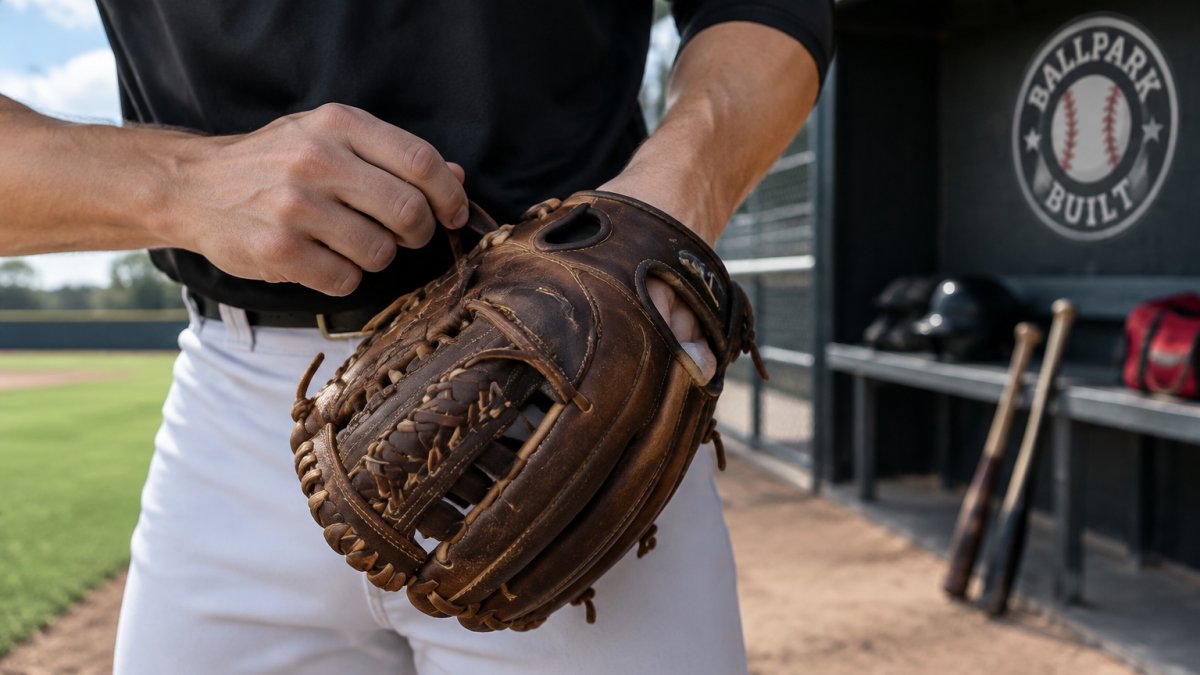
Our Ballpark Built Fielding Glove is $190, built from premium full-grain kip leather with a game-ready pocket, durable construction for everyday use, and a comfortable, secure fit.
Before you order, confirm three things: position shape, throw hand, and size chart match. Then shop the drop and pick your next glove.
The gap between a good glove and a great one shows up in the seventh inning of a tight game.
Frequently Asked Questions
What should I look for when buying premium baseball gloves online?
Check four things before you order: the leather type (full-grain kip leather and steerhide hold up longer than synthetic blends), the position-specific web pattern, the size against a baseball glove size chart, and the return policy. The global baseball glove market was estimated at USD 763.68 million in 2026, so selection is wide. Read the listing for construction details, confirm hand orientation (right-hand throw vs. left-hand throw), and make sure the seller states break-in expectations clearly.
How do I choose the right baseball glove size?
Start with a baseball glove size chart and match it to your age and position. Youth gloves run smaller, while adult gloves scale up for high school and college players. Infield gloves favor a shorter length for quick transfers, outfield gloves need more reach, and catcher's mitts and first baseman's mitts use their own sizing. Choose a glove that fits snugly and comfortably rather than one that is too large.
How long does it take to break in a new baseball glove?
Most leather gloves need a few weeks of catch play and pocket work before they feel game-ready. Play catch daily and work the pocket with a ball between sessions. Avoid soaking the glove in water or baking it, which can damage the leather.
How should I care for a leather baseball glove?
Wipe off dirt after every game, keep the glove out of direct heat and sunlight, and condition the leather lightly a few times a season. Store it closed around a ball so the pocket keeps its shape. Leather baseball glove care is mostly about moisture control: too much water breaks down stitching, and too little dries out the leather.
